
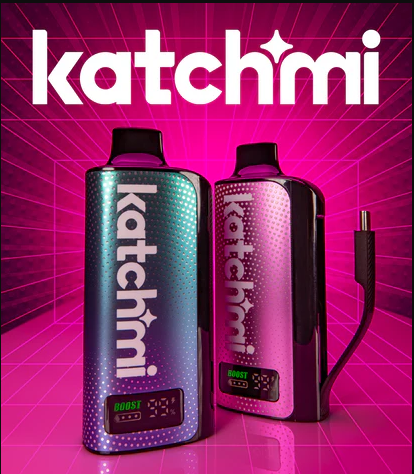
You just tore open the packaging on a fresh, high-tech disposable vape, watched the bright screen wake up, and took a quick pull that felt a little softer than you wanted. Your first reaction is to reach for the mode button or toggle switch, eager to jump straight into turbo or boost to see what the hardware can do. Firing that dual-mesh core at full power before the internal wick settles delivers a harsh thermal shock to the fresh heating element. Digital displays and microcontrollers switch output profiles in a fraction of a millisecond, but pre-filled e-liquid still relies on steady capillary flow through dense internal fibers. Rushing your firing modes before the device finds its baseline scorches sweet flavorings, degrades your nicotine, and ruins a brand-new reservoir of e-juice before you finish your first day.
The Architecture of an Advanced Disposable Vape
To see why toggling modes disrupts your vape juice so quickly, you've got to look at what's actually packed inside the chassis of a modern high-capacity disposable. Today's devices aren't the simple, single-tube plastic sticks that defined the early days of convenience vaping. They've evolved into sophisticated, high-output units that borrow advanced circuit design from traditional hobbyist hardware while keeping an all-in-one format.
At the base of the device sits a rechargeable lithium-ion battery cell, typically ranging between 650mAh and 900mAh. Because these units house massive pre-filled reservoirs designed to deliver thousands of draws, a small single-cycle cell wouldn't make it through a fraction of the e-liquid.
Manufacturers pair this cell with a modern USB Type-C charging port and an integrated battery management system. This miniature circuit board monitors incoming charging current, regulates cell temperature, and prevents overcharging, delivering steady current to the internal components.
Controlling that power is an advanced microcontroller board. This chip does far more than just sense when you take a puff through a pneumatic diaphragm. It manages active output regulation, powers a high-definition TFT or digital LED display, and runs real-time diagnostic algorithms.
The screen provides dynamic readouts of battery life and an estimated e-liquid level. That e-juice readout doesn't rely on an optical float switch floating inside the reservoir. Instead, the microcontroller uses an internal calculation: it tracks the duration of every pull, factors in the active wattage mode, and subtracts that estimated volume from a factory baseline to calculate remaining e-liquid.
The heating element inside represents one of the biggest mechanical jumps in recent hardware. Advanced disposables utilize dual-core heating systems built around two independent mesh screens.
These aren't standard spiraled wires; they're micro-perforated metallic strips etched from Kanthal or nickel-chromium alloys. Each mesh strip is wrapped in a dense, multi-layered sleeve of organic wicking cotton.
Depending on the mode you select, the circuit board can fire a single mesh coil for gentle, battery-saving pulls, alternate between coils to prevent localized heat buildup, or fire both mesh elements simultaneously in parallel to double the surface area and vapor volume.
Holding the vape juice is a high-capacity internal reservoir pack. Modern units hold anywhere from 12ml to 25ml or more of factory-sealed e-liquid.
In most designs, this e-juice isn't sloshing freely inside an empty plastic shell. It is suspended inside a dense, medical-grade absorbent polyester or polyolefin fiber matrix that wraps tightly around the central chimney.
Other cutting-edge disposables use a direct-to-wick gravity reservoir, where free-floating e-liquid feeds into the cotton wicking ports through precision-metered capillary restrictors.
Directing airflow through the body is a mechanical slider switch or airflow toggle valve, usually mounted on the bottom plate near the charging port.
This switch lets you tighten the draw for a concentrated mouth-to-lung pull or open the channels wide for an airy restricted direct pull.
On many units, this mechanical airflow slider links directly to an internal microswitch, automatically switching the electrical firing mode the moment you adjust the physical airflow.
The Modes Catalog: How Modern Disposables Fire
Even though advanced disposables maintain a streamlined interface, their internal software provides several distinct operational profiles designed to change how electrical current hits the dual-mesh core:
- Regular / Normal / Smooth Mode: The standard operational baseline for daily use. In this profile, the microcontroller activates only one of the two internal mesh coils, or alternates between them on consecutive draws to distribute heat evenly. Power output remains modest, typically cruising between 10 and 13 watts. This lower wattage produces a smooth, cool vapor that matches the wicking speed of the internal fiber reservoir, making it the ideal setting for stretching battery life, protecting cotton fibers, and extending your total puff count.
- Boost / Turbo / Pulse Mode: The high-output performance profile that unlocks maximum vapor density. When engaged via a bottom toggle or an interface button, the microcontroller alters its internal circuit paths to fire both mesh elements simultaneously in parallel. Power surges to 20 or 25 watts or higher, nearly doubling the heat flux across the wicking core. The ramp-up speed is virtually instantaneous, delivering hot vapor, an aggressive throat hit, and intense flavor at the cost of consuming e-liquid twice as fast.
- Eco / Low-Power Mode: An automated or user-selected conservation profile designed to stretch out the tail end of your battery charge and e-juice supply. The microcontroller throttles wattage down to 8 or 10 watts, softens the electrical ramp-up curve, and dims or shuts off the digital display screen. This delivers a gentle, low-temperature vape that puts minimal thermal stress on the coil and cotton.
- Stepped Wattage Profiles: Found on high-end disposables featuring dedicated adjustment buttons. Rather than locking you into simple preset names, the interface lets you cycle through specific numerical wattage steps, such as 12W, 15W, 18W, and 22W. The circuit board dynamically calculates voltage output against the coil's baseline resistance, giving you incremental control over the warmth and density of your draw.
- Airflow-Coupled Power Shifting: An automated system where the physical airflow control switch also serves as an electrical toggle. When you slide the switch to a tight, restricted intake, the board locks itself into a gentle, low-wattage single-coil mode. When you slide the control wide open, an internal contact switch trips, instantly shifting the board into high-wattage dual-mesh operation to match the increased volume of incoming air.
- Dynamic Preheat and Hard Ramping: Internal software curves that dictate how quickly the coil reaches operating temperature. A standard ramp profile slowly builds voltage over the course of a half-second, easing the vape juice into vaporization. A hard or dynamic preheat profile hits the mesh with an immediate burst of peak voltage the millisecond the draw sensor detects airflow, eliminating any sensation of coil lag.
Inside the Reservoir: The Chemical Formulation of Pre-Filled E-Juice
The e-liquid sealed inside an advanced disposable isn't the same as the traditional freebase juice bottles vapers used a decade ago. It's an intensely concentrated, chemically engineered solution tailored to vaporize cleanly on miniature mesh screens while delivering an immediate sensory punch. Every milliliter inside that internal reservoir contains a complex mixture of nicotine salts, carrier bases, synthetic flavorings, cooling agents, and heavy sweetener packages.
Nicotine Salt Chemistry and Heat Limits
The defining characteristic of disposable vape juice is the exclusive use of high-strength nicotine salts. Traditional freebase nicotine carries an alkaline pH around 8.0. At high concentrations, that natural alkalinity causes an intense, peppery throat scrape that most vapers find unpalatable.
To overcome this, formulators mix pure freebase nicotine with selected organic acids—most commonly benzoic acid, though citric, malic, or levulinic acids are sometimes substituted.
This chemical reaction converts the freebase nicotine into a protonated nicotine salt, lowering the pH level to a neutral range between 5.5 and 6.5.
By neutralizing the alkalinity, the harsh sensation on the throat disappears entirely. This allows the e-juice to deliver high nicotine concentrations, typically 50mg (5%) or 20mg (2%), without irritating the airway.
Because the salt molecule is chemically bound, it gives a smoother draw at higher strengths than freebase nicotine.
However, that organic acid bond is thermally fragile. Nicotine salts are formulated to atomize cleanly at moderate, controlled temperatures between 160°C and 190°C.
If you take an advanced disposable and jump immediately into an aggressive Boost or Turbo mode, you hit that delicate chemical bond with a sudden wave of excessive heat.
The heat shears the acid bond apart, causing the nicotine salt to de-protonate prematurely.
This thermal breakdown frees the raw, alkaline nicotine while flashing high concentrations of vapor into your airway. Instead of the smooth, satisfying draw you expected, you get a harsh, throat-tearing hit accompanied by a bitter, peppery aftertaste that ruins the intended flavor of the vape juice.
Carrier Dynamics and Capillary Migration in Fiber Matrices
The carrier base of disposable e-liquid balances vegetable glycerin (VG) and propylene glycol (PG). Disposables universally rely on a balanced 50/50 VG/PG ratio or even a 40/60 mix leaning toward higher PG.
This thin consistency is vital because of how the e-liquid is stored inside the device. In a disposable that relies on an absorbent polyester or polyolefin fiber pack, the e-juice isn't free-flowing against open wicking channels. It is suspended through capillary tension inside millions of microscopic synthetic fibers.
Propylene glycol carries a low viscosity and a boiling point of roughly 188°C, allowing it to move rapidly through those dense fibers. Vegetable glycerin is far thicker, featuring a syrupy molecular structure with a much higher boiling point around 290°C.
At room temperature, the e-liquid suspended in the outer edges of the fiber pack moves slowly toward the center where the heating elements sit. When you vape, the heat from the mesh radiates outward into the fiber pack, gently warming the surrounding e-juice. This radiant warmth lowers the liquid's viscosity, accelerating capillary migration toward the cotton wick.
If you toggle into an aggressive high-wattage mode before this thermal balance establishes itself, the coil vaporizes the thin, low-boiling PG sitting in immediate contact with the mesh in a fraction of a second.
Because the thick VG in the surrounding fiber pack hasn't had time to warm up and flow inward, the inner cotton layer dries out, creating localized hot spots across the mesh screen.
Fragile Aroma Volatiles and Synthetic Cooling Agents
Disposable e-liquids are known for their bold, punchy flavor profiles. Formulators achieve this punch by using high concentrations of aromatic flavor concentrates, often making up 15% to 25% of the total liquid volume.
These flavorings rely on complex synthetic esters, aldehydes, and terpenes to recreate bright fruit profiles, creamy desserts, and tangy candies.
Fragile fruit esters have low flashpoints. They vaporize cleanly under gentle, steady warmth. When you hit them with a sudden surge in wattage from a dual-mesh Boost mode, those complex aromatic molecules don't gently atomize; they fracture chemically. The delicate fruit notes degrade, producing a sour, chemical-tasting vapor that resembles scorched plastic or solvent.
To balance out that heavy sweetness and deliver a crisp sensation, virtually every modern disposable formulation includes synthetic cooling agents, primarily WS-23 (N-Ethyl-p-menthane-3-carboxamide) or WS-3.
Unlike traditional menthol, which carries a strong mint aroma and a sharp taste, WS-23 delivers clean, intense physiological cooling across the throat without altering the scent or flavor of the e-juice.
However, synthetic cooling agents have thermal breaking points. When exposed to the excessive surface temperatures generated by an over-driven mesh coil, WS-23 can break down, imparting a harsh, bitter metallic taste across the back of the tongue that masks the actual flavor profile of the vape juice.
Sweetener Pyrolysis and the Carbon Shell
The biggest threat to coil life and flavor longevity inside an advanced disposable is sweetener concentration. To make flavors pop instantly, formulators load pre-filled e-liquid with massive amounts of artificial sweeteners, primarily sucralose and ethyl maltol.
Sucralose provides that sweet, sugary lingering taste on the lips that characterizes disposable hardware.
The physical problem is that sucralose does not handle erratic heat well. It begins to chemically decompose at temperatures as low as 120°C, and once temperatures cross 200°C, it undergoes aggressive pyrolysis.
In a properly functioning device firing at a balanced wattage, incoming e-liquid continuously washes across the mesh screen, absorbing heat and carrying atomized sweetener away in the vapor path.
When you switch into a high-powered Boost mode before the wick is fully saturated, the mesh element spikes past that 200°C threshold almost instantly.
The sucralose in the e-juice doesn't vaporize into the air; it bakes directly onto the fine metal grid of the mesh. It sheds its volatile hydrogen and oxygen atoms, leaving behind a hard, black layer of pure carbon crust.
Because the mesh screens in disposables are fine, even a thin layer of carbon crust clogs the tiny openings in the metal grid.
This carbon shell acts as an insulator, blocking fresh e-liquid from touching the heating element directly. Subsequent liquid pools against this scorching carbon shell, where it bakes, turns dark, and ruins the flavor of the entire device with an unmistakable taste of burnt sugar.
The Core Impact: What Switching Modes Too Soon Does to Pre-Filled E-Liquid
Now we arrive at the heart of the matter: does adjusting or switching an advanced disposable vape's modes too soon positively or negatively impact the pre-filled e-liquid? Outside of a couple of specific edge cases, prematurely toggling into aggressive firing modes triggers a destructive chain reaction that degrades the pre-filled juice, burns the coil wicks, and cuts the device's lifespan short.
Fiber Starvation and Micro-Scorching
The primary mechanical issue caused by premature mode shifting is capillary starvation inside the internal storage matrix. Unlike an open reservoir where liquid flows freely against exposed cotton ports, a disposable relies on liquid migrating through a dense absorbent fiber pack to reach the cotton sleeve surrounding the coils.
When you first open a disposable and take a puff, the cotton directly touching the mesh elements is wet, but the capillary pathways connecting that cotton to the main outer fiber reservoir are dormant.
If you take a single gentle puff on Regular Mode and immediately toggle the switch into Turbo or Boost Mode, the microcontroller fires both mesh screens at maximum wattage.
The heat ramp-up speed outpaces the liquid's migration rate.
The thin layer of vape juice resting on the inside of the mesh boils away in the first half-second of the draw. Because the dense fiber pack hasn't established steady capillary suction, replacement e-juice cannot move inward fast enough to cool the glowing metal.
For the remainder of your puff, the micro-mesh screen glows red-hot directly against compressed cotton fibers.
The cotton scorches at the microscopic level, permanently carbonizing the cellulose structure. Once those plant fibers burn, their ability to pull liquid through capillary action is gone forever.
Even if you drop back down to Regular Mode afterward, that singed inner core continues to leach an acrid, bitter flavor into every single puff, permanently ruining a device that still has twenty milliliters of vape juice sitting in its reservoir.
Dual-Mesh Thermal Imbalance and Incomplete Atomization
Advanced dual-core disposables rely on balanced operation. In Regular Mode, the circuit board often manages wear by alternating power between Coil A and Coil B, or by driving Coil A at a steady, sustainable temperature while keeping Coil B in reserve.
When you suddenly engage Boost or Turbo Mode prematurely, the microcontroller slams both mesh screens with full voltage at the exact same moment.
If Coil B has been sitting cold and inactive while Coil A handled the initial puffs, Coil B's wicking cotton may have absorbed e-juice, but the surrounding liquid is cold and viscous.
Hitting that cold, viscous coil with an immediate 20-plus-watt burst causes severe thermal shock.
The rapid expansion of the metal mesh can cause the fine wire grid to buckle slightly away from the cotton backing. At the same time, the sudden heat spike flashes off the light PG, leaving thick, cold VG stuck against the cotton surface.
This creates an uneven burn pattern where Coil A vaporizes cleanly, but Coil B cooks its e-liquid into a dark syrup without atomizing it properly.
The vapor you inhale becomes a chaotic mixture of clean vapor from one coil and scorched, over-concentrated syrup from the other, destroying the delicate flavor balance of the recipe.
Internal Reflux and Reservoir Discoloration
Premature mode switching doesn't just ruin the cotton directly touching the wire; it pollutes the massive reservoir of pre-filled e-juice resting inside the device through internal wicking reflux.
When an internal mesh coil overheats from an unexpected power surge, the vape juice in the wicking zone doesn't fully clear the chimney as vapor. A large portion of it partially boils, shedding its light components while concentrating the heavy VG, food dyes, and massive sweetener doses into a thick, dark, half-burned sludge.
The moment you let go of the fire button or stop inhaling, the negative pressure inside the chassis collapses and the hot metal rapidly cools.
That rapid cooling creates a momentary contraction of air inside the internal chimney, drawing that scorched, caramelized syrup backward out of the cotton and directly into the surrounding fiber reservoir.
Because the absorbent matrix surrounds the entire central chimney, that dark, bitter sludge bleeds outward into the clean, unvaped liquid.
Over the course of a day, that contaminated syrup spreads through capillary action, turning clear or light-golden e-juice into a cloudy, amber fluid.
The clean, fruity sweetness you paid for is completely eclipsed by a stale, burnt-caramel undertone that worsens with every puff you take.
Nicotine Salt Breakdown and Harsh Throat Hit
One of the most immediate signs of premature mode switching is a sudden, sharp change in the quality of your throat hit.
As covered in our chemical breakdown, high-strength nicotine salts rely on stable, low-to-moderate temperatures to stay chemically bound to their organic acid partners.
When you switch into Boost Mode before the coil has established a steady cooling flow of e-liquid, the temperature at the mesh wire spikes well past safe operational windows.
That excessive heat causes the nicotine salt molecules to break down violently. The benzoic acid bond shears apart, reverting the compound back into alkaline freebase nicotine while generating volatile, acidic byproducts.
When this happens with a 50mg (5%) formulation, the physical result is brutal. You expect a smooth, gentle inhale, but you're hit with a harsh, fiery blast that scratches the back of your throat, triggers an immediate coughing fit, and leaves a persistent burning sensation across your tongue.
The chemical balance of the pre-filled e-juice has been broken, and no amount of cooling agent in the recipe can mask the harshness of thermally degraded nicotine.
Tactical Exceptions: When a Quick Mode Change Saves Your E-Liquid
While jumping straight into high-output modes on a fresh disposable usually leads to disaster, there are specific, practical scenarios where changing modes can actively protect your vape juice and improve your experience. The secret lies in understanding how the hardware is behaving and using a lower or calculated setting to solve a clear mechanical problem.
The most valuable application is dropping down into Eco Mode or Regular Mode to clear chimney flooding. If a disposable has been sitting in a warm environment, like a pocket or a sunlit room, the pre-filled e-juice inside the fiber pack thins out dramatically.
Surface tension drops, and excess liquid pools directly inside the central chimney around the mesh coils.
If you try to take a hit in Boost Mode while the coil is flooded, the violent burst of power causes the pooled liquid to boil violently, popping and spitting hot droplets of raw, concentrated nicotine salt e-juice straight up the mouthpiece.
You can save the situation by immediately dropping the device into Eco Mode or its lowest power setting. Taking three or four gentle, extended draws on this mild setting applies low, steady heat to the coil without shocking the liquid.
This gently vaporizes the excess pooled e-juice without aggressive popping, clearing the flooded chimney and restoring proper airflow. Once the airway clears and the gurgling sound vanishes, you can return to your normal vaping routine without having wasted liquid or irritated your mouth.
Another genuine benefit is using Eco Mode to stretch liquid quality when the battery drops below 20%. As lithium-ion cells discharge, their internal voltage sags under heavy loads.
If you try to pull a heavy Boost Mode draw on a depleted battery, the microcontroller struggles to step up the voltage cleanly, resulting in erratic, pulsing power delivery that bakes e-juice unevenly.
Switching to Eco Mode drops the electrical demand to a level the depleted battery can deliver smoothly, maintaining a flat, stable temperature that vaporizes your remaining e-juice cleanly until you can plug the unit into a charger.
Shop-Floor Rules for Managing Output Profiles
Managing the firing modes on a high-capacity disposable shouldn't be an impatient guessing game. If you want to explore the different power settings on your device without scorching the coils, ruining premium vape juice, or cutting thousands of puffs off its lifespan, stick to these counter-tested shop habits:
- Respect the Break-In Window: Never pull a brand-new disposable out of its packaging and immediately flip the switch to Boost or Turbo Mode. Even though the device is pre-filled at the factory, the cotton wicks surrounding the dual mesh coils have been resting in stationary liquid. Take your first thirty to forty puffs exclusively in Regular or Smooth Mode. This gentle break-in period lets the mesh element expand and contract naturally, washes away any residual fiber taste, and establishes active capillary flow between the outer reservoir pack and the central wicking core.
- Space Out Your Puffs When Running High Output: When you do decide to engage Boost Mode, treat it as a temporary performance setting rather than your all-day baseline. The dual mesh coils consume liquid at twice the normal rate. Chain-vaping in Boost Mode—taking back-to-back pulls every few seconds—drains the inner cotton faster than the dense internal fiber pack can replenish it. Space your draws at least fifteen to twenty seconds apart when firing in Boost Mode, giving capillary pressure time to pull fresh e-liquid back into the center of the coil.
- Never Vape Immediately Off the Charger: Advanced disposables feature high-speed USB Type-C charging ports, and fast charging generates significant internal heat. When you unplug your device after a charging cycle, the battery cell and the surrounding chassis are warm. If you immediately flip the switch to Turbo Mode and take a long draw, that internal ambient heat combines with the coil's power spike to push operating temperatures dangerously high, instantly scorching your e-juice. Let the device rest on your table for five minutes after charging so the battery and internal reservoir can return to room temperature.
- Match Airflow to Your Selected Mode: If your disposable features an independent mechanical airflow slider alongside electronic mode switching, keep them synchronized. Firing a high-wattage Boost Mode with the airflow slider closed down to a tight, restricted hole suffocates the coil. The heating elements rely on incoming cool air to carry away heat and regulate surface temperatures. If you want a tight, concentrated draw, keep the device in Regular Mode; only open the airflow slider wide when you engage higher power tiers.
- Watch for Warning Signs on the Digital Screen: Keep an eye on your device's e-liquid readout. When the screen indicates that remaining juice has dropped below 20% or 15%, permanently switch the device out of Boost Mode and run it exclusively in Regular or Eco Mode. As the reservoir pack empties, the liquid held in the furthest corners of the fiber matrix takes much longer to migrate inward. Running high-output modes on a nearly empty disposable is guaranteed to cause immediate dry hits and scorch whatever vape juice remains inside.
The Rhythm of the Reservoir
Digital screens and tactile toggle switches make it tempting to jump straight into maximum power, but dense fiber packs run on physical wicking limits that software cannot override. Rushing into dual-mesh boost settings before the coils find their thermal balance shocks the delicate chemistry of your e-juice, turning smooth nicotine salts and sweet flavorings into harsh carbon crust. True flavor performance doesn't come from pushing an all-in-one unit to its absolute power limit; it comes from giving the internal reservoir the time and steady warmth it needs to feed the wire evenly. Letting your disposable settle into a natural stride preserves the clean, layered taste of the vape juice from the very first puff all the way until the reservoir runs dry.