
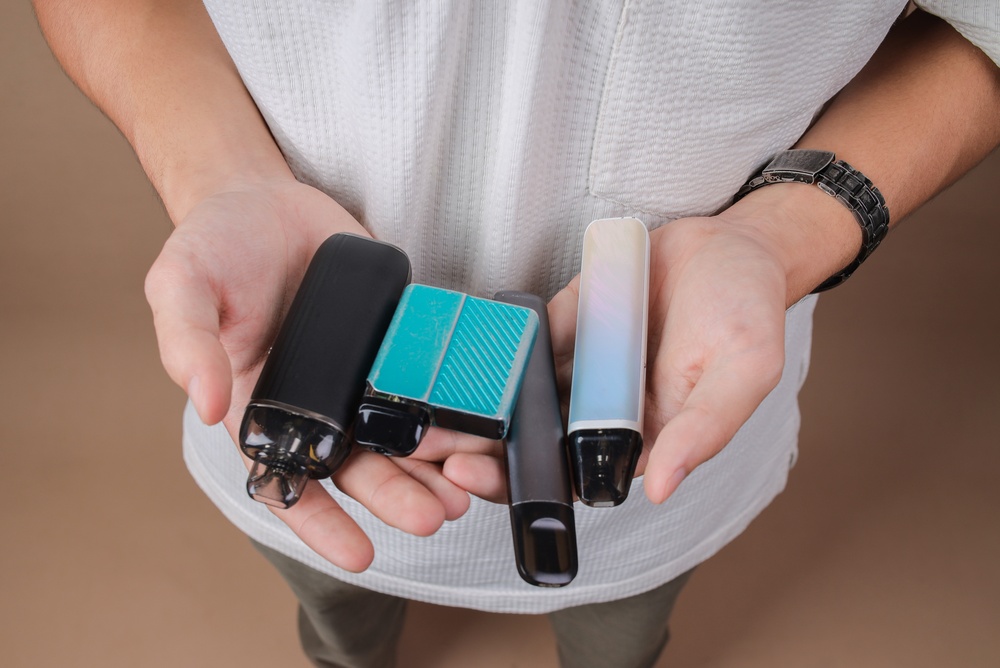
Open pod systems built their reputation on featherweight portability, offering an easy way to leave bulky hardware behind without sacrificing a satisfying draw. Today's refillable lineup swings dramatically between wispy plastic pens designed to disappear in a pocket and dense metal devices that carry genuine weight in your grip. For every vaper who wants an ultra-light setup that never drags down a shirt pocket, there is someone else who actively looks for the solid, drop-resistant heft of a reinforced chassis. That ongoing balance between grab-and-go stealth and rugged, feature-dense performance defines how modern refillable devices are actually designed. Pinpointing what genuinely pushes an open pod system onto the heavy side helps you figure out whether that extra mass solves your daily frustrations or just adds needless bulk.
The Spectrum of Refillable Convenience That Defines an Open Pod System
At its core, an open pod system separates itself from the rest of the vape world through its refillable cartridge, handing control of your e-liquid choices straight back to you. Instead of tossing plastic hardware into the trash every time an internal reservoir runs dry, you pull a flexible silicone plug on the side or bottom of the cartridge and fill it from your own bottle of e-juice. That simple plug opens the door to hundreds of flavor profiles, whether you prefer high-strength nicotine salts for a punchy throat hit or traditional freebase vape juice for smoother clouds. Carrying a couple of spare cartridges allows you to swap flavors in a matter of seconds without carrying multiple complete devices. Beyond saving money compared to pre-filled pods or throwaway disposables, this refillable architecture significantly cuts down on plastic waste while giving you total control over nicotine strengths and liquid ratios.
On the basic end of the spectrum, open pod systems embrace total simplicity, stripping away buttons, dials, and menus to create an effortless pocket carry. These slender stick-style setups rely entirely on draw-activated firing sensors that trigger power instantly when you inhale, completely eliminating external buttons that might accidentally fire inside a pocket. Airflow is fixed through tiny inlet pinholes stamped right into the frame, producing a tight, cigarette-style mouth-to-lung draw that never shifts or requires adjustment. Visual feedback stays equally clean, typically relying on a single pinhole LED that blinks in simple color codes to warn you when battery levels dip low. Their cartridges utilize permanently sealed, high-resistance coils typically hovering between 1.0 ohm and 1.4 ohms, running at fixed low power outputs around 11 to 15 watts to deliver a discreet puff with virtually no learning curve.
Step over to the advanced side of the category, and open pod systems transform into feature-dense hardware engineered for vapers who want to customize every puff. Rather than leaving you stuck with one automatic draw, advanced setups offer dual activation, letting you choose between instant auto-draw or firing with a dedicated button. They also introduce additional control buttons right below the fire key, giving you dedicated plus-and-minus controls to dial wattage up or down in single-watt increments. Crisp OLED or TFT display screens keep your wattage setting, static coil resistance, and exact battery percentage right in plain view. Performance expands further through dual airflow systems—combining frame intake slots with mechanical slider valves—that let you shift from a restricted mouth-to-lung pull to a breezy direct-lung draw across a versatile range of 0.6-ohm to 0.8-ohm mesh cartridges.
Supplying the power to drive those varied feature sets requires an internal power plant built around the device's specific everyday goals. Basic stick-style devices run on compact lithium-polymer pouch cells sitting between 350mAh and 520mAh, holding the frame wafer-thin and practically weightless at the expense of needing a recharge by late afternoon. Advanced open pod systems pack substantially larger 1000mAh to 1500mAh cells designed to sustain power-hungry mesh coils, digital screens, and continuous firing throughout a long workday. Housing that much chemical capacity safely requires thicker internal retention rails, an integrated protection circuit module taped directly to the pouch cell, and an upgraded USB-C board built to handle fast-charging current. That extra electrical volume fundamentally changes the interior profile of the device, trading an airy, hollow casing for a tightly packed power source.
Sitting at the top of the chassis is the cartridge docking bay, which serves as the physical and electrical junction for the entire setup. Refillable cartridges molded from clear, shatter-resistant PCTG plastic slide directly into this shallow recess, held fast by a pair of small nickel-plated neodymium disc magnets or molded side-retention clicks. Inside the bay, spring-loaded, gold-plated brass pins make contact with the base of the cartridge to deliver power to the heating element, while a raised silicone gasket surrounds the draw sensor to seal off stray moisture. The metal chassis wraps tightly around this docking cavity, shielding the cartridge against drops without adding needless top-heavy bulk. Because the lightweight plastic pod sits up top while the heavy battery cell and zinc housing rest below, the center of gravity settles naturally into your palm, establishing a bottom-weighted balance that feels completely different from top-heavy hardware.
What Counts as a Heavyweight Open Pod System?
Gauging how heavy an open pod system actually feels means looking past the bare dry gram rating printed on the packaging. Once you snap in a cartridge filled to the brim with dense e-juice, that bare frame takes on an entirely different presence in your hand. Where that mass sits in your grip dictates whether the setup disappears comfortably into your routine or constantly reminds you it's there. Breaking down the real-world weight tiers reveals where effortless pocket carry stops and noticeable heft begins:
- The Dry Weight vs. Filled Reality: Factory spec sheets almost always list the bare dry weight of the battery body alone, which completely ignores the components you carry on the street. That number jumps the moment you snap in a refillable cartridge loaded with 2ml or 3ml of e-liquid. High-density vegetable glycerin adds measurable mass, and cotton wicking soaked with vape juice contributes another small layer of weight. Measuring your hardware fully prepped and filled to the brim gives you the honest truth about how it actually rides in your pocket throughout the day.
- The Featherweight Baseline (roughly 15g to 30g loaded): This tier represents the ultra-light baseline that put refillable pod systems on the map. Setups in this class rely on thin stamped aluminum tubing or polycarbonate shells paired with modest 350mAh to 500mAh internal batteries. They skip screens and control buttons entirely, sticking to draw-activated firing and small cartridges with integrated coils. At under 30 grams ready to vape, a device like this feels like carrying an ordinary pen, sliding into a dress shirt pocket without pulling the fabric or hanging from a lightweight neck lanyard without any dragging sensation.
- The Everyday Midweight Tier (roughly 35g to 60g loaded): Moving into the midweight bracket brings a noticeable step up in battery life and everyday drop resistance without feeling bulky. Devices here typically house 650mAh to 900mAh cells wrapped in slightly thicker aluminum alloy or light zinc frames. Many feature dual activation, simple LED indicators, and basic airflow switches alongside 2ml or 2.5ml cartridges. These daily workhorses rest easy in your palm and survive hard drops onto concrete or asphalt without cracking, making them a solid middle pick for errands and work shifts.
- Entering the Heavyweight Territory (roughly 70g to 110g+ loaded): Once an open pod system crosses 70 grams and climbs toward 100 grams or more, it enters true heavyweight status for the format. This weight bracket belongs almost exclusively to advanced open pod systems packed with die-cast zinc unibodies, digital screens, additional wattage buttons, and massive 1000mAh to 1500mAh batteries. These devices feel dense and substantial, handling more like a solid metal bar than a plastic pod. Carrying an 85-gram or 95-gram setup in lightweight gym shorts will visibly pull your waistband down, making them far better suited for jeans, jacket pockets, or a bag.
- Balance, Mass Distribution, and Pocket Dynamics: Total mass on a scale is only half the story, because how that weight settles inside the frame dictates daily comfort. Since the plastic cartridge up top weighs only a few grams, virtually all of an open pod system's heft sits low in the frame where the battery cell and zinc base live. In a short, wide device, that low center of gravity keeps the unit resting comfortably upright in your hand. In a tall, narrow stick, however, that concentrated bottom heft creates a pendulum effect when hung from a lanyard or tucked into a loose pocket, causing the device to swing around or slide out when you bend over.
So, What Makes an Open Pod System Heavy in the First Place Then?
Extra heft in a refillable pod device never happens by accident or careless design. Instead, physical mass stacks up as manufacturers add structural protection, larger battery cells, and richer control electronics to the frame. Looking closely at the primary hardware layers reveals exactly where those extra grams accumulate inside modern setups:
- Chassis Metallurgy and Exterior Casings: The material chosen for the outer shell is the single biggest contributor to a pod system's final weight. Basic starter pens utilize extruded aluminum alloy tubing or molded polycarbonate, which have a light density between 1.2 and 2.7 grams per cubic centimeter. Advanced setups, on the other hand, rely on die-cast zinc alloy, carrying a dense mass near 7.1 grams per cubic centimeter. When a manufacturer casts a thick zinc shell to survive accidental drops and finishes it with electroplated bezels or textured faux-leather panels, the bare casing alone can easily top 45 to 50 grams before any electronics are installed.
- Battery Capacity and Internal Cell Density: Lithium-polymer chemistry carries unavoidable physical weight that scales directly with milliamp-hour capacity. A compact 400mAh cell designed for low-wattage mouth-to-lung draws weighs only about 8 to 10 grams, keeping the lower half of the device light. Stepping up to a high-capacity 1200mAh or 1500mAh cell to power advanced screens and lower-resistance mesh coils adds a dense, multi-layered pack weighing 25 to 30 grams. That concentrated cell sits firmly at the base of the frame, delivering enough runtime to last all day while significantly boosting total carry weight.
- Internal Chipsets, Displays, and Control Buttons: The internal electronics required to run an open pod system vary dramatically between basic and advanced designs. Minimalist draw-activated devices get by with a tiny vacuum pressure microphone sensor and a bare-bones logic board that weighs virtually nothing. Advanced systems incorporate larger circuit boards capable of regulated wattage output, static coil resistance checks, and safety cutoffs. Adding a digital OLED display screen, protective acrylic covers, a tactile fire button, additional wattage adjustment buttons, and a reinforced USB-C charging assembly adds multiple small hardware layers that steadily push the scale upward.
- Airflow Adjusters and Docking Hardware: Basic open pod systems simply stamp fixed air holes straight through the outer casing, adding zero weight. Advanced devices incorporate mechanical airflow sliders with small silicone sealing gaskets, dual-slotted air channels, and metal control tabs. Down inside the docking recess, small neodymium disc magnets and gold-plated brass contact pins must be anchored firmly into the frame to maintain a solid circuit with the cartridge. While those individual parts don't weigh much alone, pairing them with the reinforced metal collar surrounding the cartridge port concentrates extra mass right at the top of the battery housing.
Rethinking What Real Build Quality Means in Your Hand
Treating heavy physical mass as an automatic badge of superior quality ignores the entire reason open pod systems captured the vaping world in the first place. Slapping thick alloy armor onto a chassis doesn't make your e-liquid taste any sharper or your nicotine hit any smoother if that extra metal turns everyday carry into a nagging chore. A genuinely great setup earns its space by staying unobtrusive until you call on it, delivering consistent battery current and reliable vapor without demanding a reinforced pocket just to leave the house. Once you cut through the industry obsession with rugged metal shells and inflated spec sheets, the right open pod is simply the one that delivers your ideal draw without making you think twice about carrying it.