
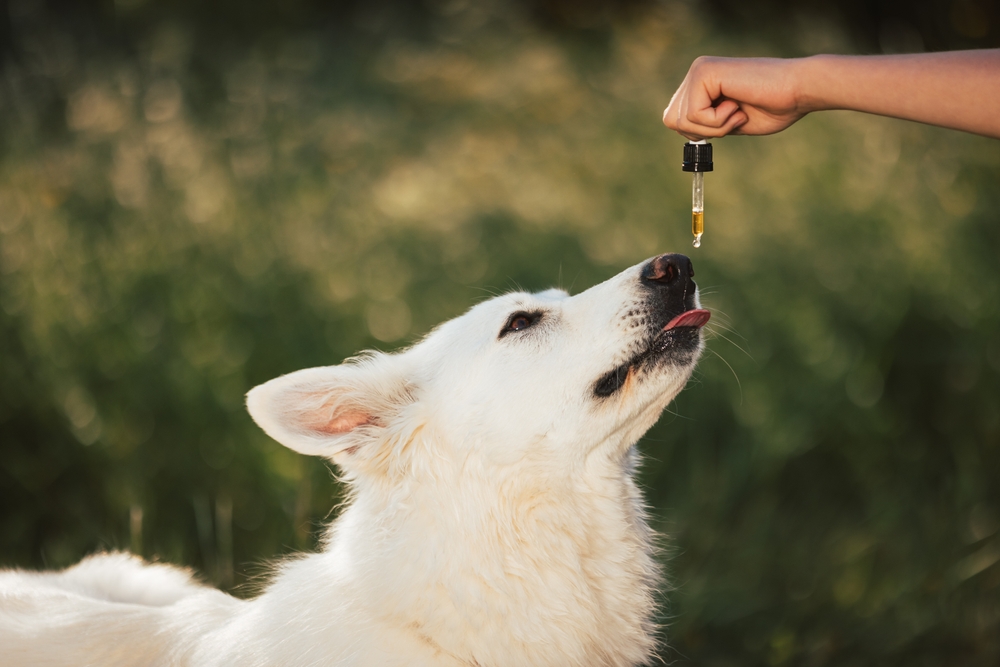
 If there’s one thing that unites all dog owners, it’s
a deep care and love for their four-legged companions. If dogs are man’s best friend, then that
explains why so many dog owners feel a sense of despair when their pooch is
feeling unlike themselves. It can be
hard to watch a dog struggle with a particular ailment, as we can’t comfort
them with words and ask them what their symptoms are.
Dog owners who appreciate a more holistic approach to
pet care are starting to turn to CBD products
derived from the hemp plant, that are specifically manufactured for canine use.
Is it Safe to Give a Dog CBD?
First, let’s answer the most important question, which
is whether or not it’s actually safe to give a dog CBD. Experts agree that cannabidiol is fine for
dogs, because all mammals share an endocannabinoid system (ECS)
– it’s the reason why our bodies utilize CBD and other cannabinoids
in such a widespread and useful way. The
endocannabinoid system is in charge of regulating various bodily processes, and
it does this by sending cannabinoids to strategically placed cannabinoid
receptors. Because of this system, CBD
is nontoxic to mammals, as the ECS simply stores excess levels of cannabinoids
for later use.
Research on CBD’s effects on dogs is limited still, so
most of the evidence supporting its use is anecdotal or based on studies that
don’t meet the rigorous standards of scientific research. This doesn’t mean CBD isn’t effective, but
it’s a factor to consider when evaluating its potential benefits and risks.
What Could CBD Do For a Dog?
So, what can CBD do for a dog? Well, because dogs also have endocannabinoid
systems, it seems like any properties that CBD can offer us, it can offer dogs
as well. This includes its calming properties, and its potential properties for
pain. If you’re unsure as to whether or not CBD
will be helpful for your dog’s specific issue, you can look for studies
regarding CBD’s effects, and apply them to your canine.
Is Giving a Dog CBD Legal?
It’s perfectly legal to give your dog CBD that comes
from the hemp plant, which is the plant from which all commercial CBD goods are
made. Hemp contains too low an amount of
THC to produce psychoactive effects.
It’s important to note that marijuana is unsafe for dogs due to their
difficulty processing high levels of THC.
What Should a Dog Owner Know Before Giving Their Dog CBD?
So, how can you give a dog who isn’t feeling well a
useful dose of CBD? Well, we’ve created
a short guide that covers everything that you need to know before starting them
on a routine.
Tip #1: Speak to Your Veternairan
Yes, you want to speak to your veterinarian,
especially f your dog isn’t feeling well, as your vet needs to know. And, if you plan on giving them CBD, your vet
may be helpful when it comes to determining the right amount to give them, how
long it may take before the CBD begins working, and so on. You should update your vet on any changes as
your dog begins taking CBD on a regular basis.
Tip #2: Select a Pet-Friendly CBD Product
It’s absolutely crucial that you only give your dog a CBD product formulated for canines. For starters, CBD products for humans may
contain ingredients that are unsafe for dogs.
Furthermore, pet-friendly CBD products contain potency levels that’re more
appropriate for dogs’ bodies.
Tip #3: Choose the Right Milligram Strength for Their Body Weight
Companies that make CBD pet products offer a number of
milligram strengths that each correspond with a different body weight
range. Choose the right milligram
strength for your dog’s body weight to ensure that they’re getting the proper
number of cannabinoids for their unique needs.
Tip #4: Choose an Agreeable Delivery Method
CBD dog goods come in a number of delivery methods,
including edible treats, tinctures, food additives and topicals. Each delivery method has its own activation
period and level of potency felt within the body. Explore the options that are available and
choose the one that’s most likely to agree with his or her needs and
preferences.
Tip #5: Monitor Them
When you start your dog on a hemp regimen, it’s
important that you monitor them closely to see how they respond to the intake
of CBD and other hemp compounds. Look
for changes in behavior and signs in relief.
There’s always a small chance that your dog won’t enjoy CBD, so look for
signs of that as well.
Could There Be Any Potential Side Effects When Administering Your Dog
CBD (Digesting or Applying Topically) and Could It Make Them Feel Worse?
Potential side effects such as dry mouth, lowered
blood pressure, or drowsiness can occur when administering CBD for your canine
to digest. High doses might lead to more
severe issues. You see, while CBD isn’t
known to be lethal, giving a dog too much can lead to discomfort or potential
complications. Proper dosing according
to the dog’s size and the product’s concentration is essential.
Not to mention, CBD can interact with other
medications. So, if your dog is on
medication, it’s imperative to consult with a veterinarian before adding CBD to
ensure there are no potential harmful interactions. Also, in dogs with underlying health issues,
the use of CBD could potentially exacerbate certain conditions. Again, consulting with a veterinarian is crucial
to understand the potential risks and benefits for your specific dog.
Another thing to keep a look out for are CBD-infused products
that have third-party lab reports, because some CBD products may not contain
the amount of cannabidiol advertised, while others may have contaminants.
Now, as for CBD topicals for dogs, these are generally
considered fine to use by pet owners to address various issues such as skin
irritation, pain, or inflammation. However,
like any treatment, they can potentially cause adverse reactions in some dogs. The severity and occurrence of these
reactions can vary based on the individual dog’s sensitivity, the quality of
the CBD product, and the dosage used. Some dogs might experience adverse
effects from CBD topicals, including:
1.Allergic Reactions:
Some dogs might be allergic to ingredients in the CBD topical, not necessarily
the CBD itself. Signs of an allergic
reaction can include redness, itching, or a rash at the application site.
2.Gastrointestinal Issues:
If a dog licks the area where the topical was applied, they might ingest some
of the product, potentially leading to gastrointestinal upset, including
symptoms like diarrhea or vomiting.
3.Skin Irritation:
Although CBD topicals are meant to soothe the skin, some dogs might have a
sensitivity to CBD or other ingredients in the product, leading to irritation
or worsening of skin problems.
Final Thoughts
Overall, cannabidiol has gained popularity for its
potential benefits, including in pets. However, it’s important to approach the
use of CBD for dogs with caution. While
some dog owners report positive effects, such as reduced anxiety or pain
relief, the ‘science’ is still emerging, and the effects can vary depending on
numerous factors. Hence, it can all vary
on a case-by-case basis. So, if you wish
to begin a CBD regimen for your pup, then use this article as a guide in order
to go about it in the right way.
And remember, it’s crucial to talk to a veterinarian
before starting your dog on CBD, especially if your dog has existing health
issues or is on medication. They can
provide advice based on the latest research and their professional experience,
helping you make a decision that’s in the best interest of your dog’s health.
Leave a Reply