
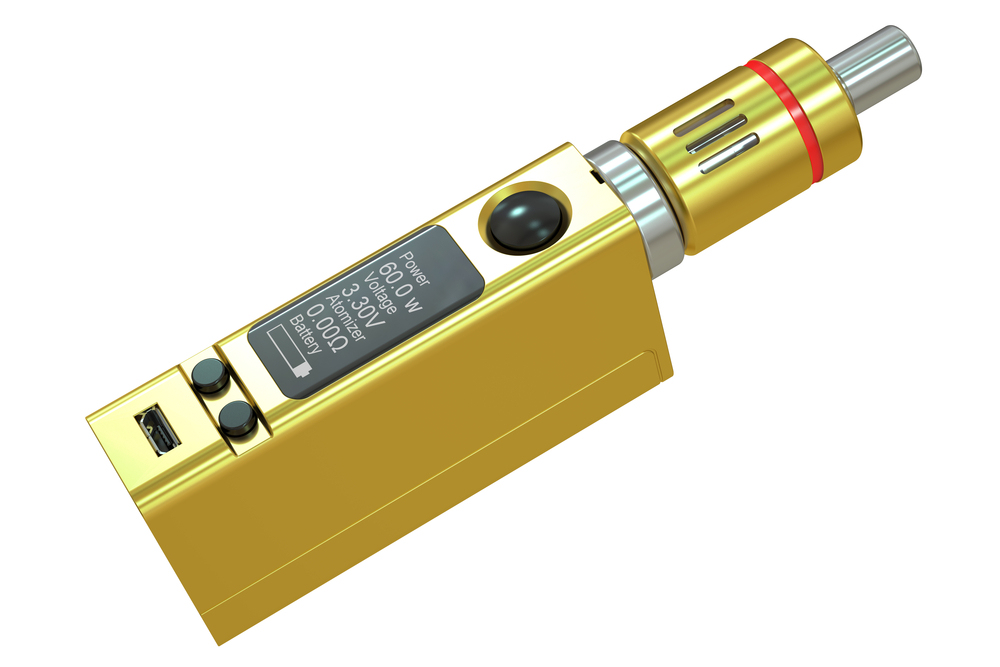
Stepping up your setup with a feature-packed box mod usually feels like getting handed the keys to a custom sports car. Those internal chipsets pack a staggering variety of output modes, designed to tweak how power flows from your batteries straight to the coil. Yet tuning a specific mode at twenty watts delivers a completely separate experience than firing that exact same setting at eighty watts. Power volume fundamentally shifts the physical behavior of your device, altering ramp-up times, vapor density, and internal circuit management. Mastering this balance gives you total control over every single draw, turning mystery settings into reliable tools for your ideal build.
The Core Electronics of Box Mod Output Modes
Box mods function as miniature, highly intelligent power conversion stations. At their core, modern vape chips take the direct current supplied by high-drain lithium-ion batteries and modify it before sending it to your atomizer. The primary mechanism responsible for this conversion relies on pulse width modulation alongside DC-to-DC converters known as step-up (boost) and step-down (buck) circuits. When you press the fire button, the chipset samples the electrical resistance of your installed coil and calculates the exact voltage required to hit your chosen output. How that electrical current arrives at the wire varies dramatically based on the specific mode you select, but the magnitude of wattage applied dictates the actual physical speed of thermal transfer and energy dissipation.
Variable Wattage Standard vs. Low and High Heat
Variable Wattage remains the bedrock of modern box mods, offering a straightforward user interface where you select a target power output in watts, and the device handles the electrical math behind the scenes. However, running Variable Wattage at twenty watts creates a totally distinct circuit dynamic compared to running that same Variable Wattage mode at eighty or one hundred watts.
At lower wattage levels, typically ranging from ten to thirty watts, the board delivers a relatively gentle flow of electricity. The step-down converter frequently steps down the battery's raw voltage output to deliver precise, lower voltage signals. Because the energy transfer rate is modest, coil heating occurs at a steady, manageable pace. This lower power threshold works exceptionally well for thin, high-resistance wire builds like simple single-strand Kanthal. The thermal mass of these thin wires is minimal, meaning even a small influx of power creates enough heat to vaporize liquid smoothly without overheating the coil wire or crisping the cotton wick. Energy efficiency is high here, battery drain remains low, and the internal board runs cool because it operates far below its maximum current handling capacity.
Conversely, cranking Variable Wattage mode up into high-tier territories, such as seventy to one hundred and twenty watts, completely alters how the chipset and coil interact. At these elevated levels, the mod demands massive current draws from your batteries, often triggering the boost converter to step up voltage well past the battery's native cell voltage if you are running low-resistance, thick multi-strand coils like Fused Claptons or Aliens. The thermal transfer is rapid and aggressive. Heavy metal coils possess substantial surface area and thermal mass, requiring this heavy burst of wattage just to overcome thermal inertia. If you tried running those thick coils at low wattage, they would barely warm up, yielding cold, weak vapor. But at high wattage, the electrical energy translates directly into rapid heat generation, saturating the chamber with dense vapor within milliseconds. The trade-off comes in increased heat buildup across the mod chassis, faster battery drain, and a heightened risk of burning your wick if liquid flow cannot keep up with the rapid evaporation rate.
Deciphering Pulse and Curve Modes Across Power Thresholds
Advanced chipsets often move beyond static wattage delivery by introducing dynamic power delivery modes. Pulse Mode and Custom Wattage Curves allow users to manipulate how power reaches the coil throughout a single draw. While these features are designed to enhance flavor and prevent dry hits, their real-world performance is heavily conditioned by the baseline wattage assigned to them.
Custom Wattage Curves: Low Wattage Precision vs. High Wattage Punch
Custom Wattage Curve modes split a single firing cycle into tiny time increments, usually measured in half-second or one-second blocks. Users assign specific wattage values to each increment, creating a personalized power profile for every hit.
When utilizing curve mode at lower overall wattage tiers, the goal is typically fine-tuning subtle flavor nuances and eliminating coil ramp-up delay without scorching delicate e-liquids. For example, a mouth-to-lung build might struggle with a slight delay if set to a static fifteen watts. By programming a curve that starts at twenty-two watts for the first half-second before dropping down to sixteen watts for the remainder of the pull, you overcome the initial wire chill instantly. Because the power drops right after the coil reaches ideal operating temperature, the liquid vaporizes cleanly without running too hot over an extended four-second draw. The low wattage ceiling keeps energy consumption minimal while giving you pinpoint thermal accuracy.
Applying a custom curve at high wattage levels serves an entirely distinct purpose: heat saturation management over extended pulls. When running a build at eighty-five watts, holding the fire button down for three or four seconds can cause heat to accumulate exponentially in the atomizer deck. By configuring a high-wattage curve that fires at ninety-five watts for the first fraction of a second, stabilizes at 85 watts, and then steps down to seventy watts toward the tail end of the draw, you create a powerful initial hit that naturally tones down before the coil gets uncomfortably hot. This prevents heat soak in the top cap and protects your cotton from drying out during longer draws. The identical curve logic operates on both ends of the spectrum, but low wattage curves focus on overcoming ramp-up, whereas high wattage curves focus on controlling runaway thermal accumulation.
Pulse Mode Dynamics at Varying Output Levels
Pulse Mode represents a proprietary algorithm designed to send rapid micro-bursts of voltage to the coil continuously while you fire, often pulsing every fraction of a second rather than supplying a solid, uninterrupted electrical stream. This rapid pulsing aims to maintain a stable coil temperature throughout the entire length of your draw.
At low wattage configurations, Pulse Mode produces an extraordinarily smooth, consistent draw. Because low power settings involve less overall electrical energy, the micro-bursts act as gentle pulses that maintain steady vaporization without noticeable fluctuations in vapor density. The coil stays right at the sweet spot of evaporation, ensuring sensitive flavor notes are preserved.
When shifted into high wattage brackets, Pulse Mode takes on a far more energetic personality. The rapid voltage spikes deliver intense bursts of energy that break through thick coil masses easily. Every micro-pulse hits the heavy wire with enough force to generate instantaneous vapor production, yet the brief pauses between pulses prevent the wire from continuously escalating in temperature. This creates a punchy, extremely responsive draw that feels punchier than standard Variable Wattage, allowing high-power enthusiasts to push dense cloud production without frying their wicks on prolonged pulls.
Temperature Control Modes: Power as the Acceleration Pedal
Temperature Control (TC) mode operates on a completely distinct premise than standard wattage modes. Instead of blindly sending a set amount of power to the atomizer, TC mode measures the changing electrical resistance of specific metals (like Stainless Steel, Nickel, or Titanium) as they heat up. The chipset uses this Resistance Temperature Coefficient calculation to estimate the real-time heat of the wire and throttle output to keep it under a set limit.
Now, a common point of confusion among vapers is the role that wattage plays inside Temperature Control mode. In TC mode, your target temperature acts as the speed limit, while your ramp-up wattage acts as the accelerator pedal. Adjusting your wattage setting in TC mode dramatically alters how quickly you reach that thermal cap.
Setting a low initial wattage within Temperature Control mode creates a gradual, linear warm-up curve. If your TC target is set to 450°F, but your ramp-up wattage is capped at twenty-five watts, the coil will take a noticeable moment to reach that targeted temperature. Electricity flows at a controlled rate, slowly heating the wire until it approaches the designated heat ceiling. Once there, the chipset barely needs to adjust power because twenty-five watts is just barely enough energy to maintain that thermal equilibrium. This approach is ideal for subtle flavor tasting, cool vapor preferences, and conserving battery longevity.
Conversely, assigning a high ramp-up wattage inside Temperature Control mode changes the system dynamics completely. With seventy-five or eighty watts configured as your TC ramp-up power, pressing the fire button sends an immediate surge of electricity to the coil. The wire reaches your 450°F limit almost instantly, yielding immediate vapor output from the very first millisecond of your draw.
However, the moment the chip detects that target temperature has been reached, it aggressively throttles back the power output, dropping wattage down drastically to prevent exceeding your temperature cap. You get the benefit of instant ramp-up without the danger of dry hits or burned cotton, demonstrating how high wattage in TC mode acts as a temporary booster rather than a sustained energy output.
Bypass and Variable Voltage Modes: Unfiltered Power vs. Direct Control
To round out the full spectrum of box mod functionality, we must look at Bypass Mode and Variable Voltage (VV) Mode. These options bypass complex internal calculations to give users direct electrical control over their builds, yet their real-world impact changes drastically based on wattage ranges and coil resistance.
Bypass Mode Behavior Across Resistance and Voltage Drops
Bypass Mode essentially turns your regulated box mod into a mechanical mod while preserving the safety protections built into the board. In Bypass Mode, the wattage adjustment buttons are disabled. The chip delivers the un-regulated voltage of your batteries directly to the atomizer, meaning actual output power is dictated entirely by Ohm's Law and your coil's resistance.
When you attach a high-resistance coil build (such as 1.0 ohm) while in Bypass Mode, the resulting output naturally defaults to a low wattage tier. A fully charged battery outputting 4.2 volts into a 1.0-ohm build generates roughly 17.6 watts of power. As the battery drains down to 3.5 volts, that output naturally drops down to around 12.2 watts. The circuit operates under low electrical strain, delivering a soft, consistent draw that gradually cools down over the life of the battery charge.
If you attach an ultra-low resistance build (such as 0.15 ohms) in Bypass Mode, the exact same setting produces massive high-wattage output. A fully charged cell pushing 4.2 volts into 0.15 ohms generates roughly 117 watts of initial power. The current draw is intense, resulting in rapid coil heating, massive vapor volume, and noticeable voltage drop as the battery handles the heavy load. This illustrates how Bypass Mode adapts its effective wattage level based entirely on the physical characteristics of the attached wire build, offering low-power or high-power performance based solely on hardware geometry.
Variable Voltage Tuning Compared to Pure Wattage Management
Variable Voltage mode allows users to select raw voltage output directly (typically from 3.0 to 6.0 volts) rather than selecting target wattage. While Variable Wattage automatically adjusts voltage as coil resistance shifts, Variable Voltage maintains a constant electrical pressure regardless of what atomizer you screw on top.
Tuning Variable Voltage at lower thresholds (such as 3.0V to 3.5V) produces a predictable, mild hit across most standard coil builds. Energy transfer is gentle, keeping heat generation low and protecting sensitive coil configurations. This provides a traditional style of vaping that stays smooth and consistent without aggressive heat spikes.
Pushing Variable Voltage into upper ranges (such as 4.8V to 6.0V) scales wattage output exponentially. Because power increases with the square of voltage, small increases in set voltage result in substantial jumps in wattage output. Running high voltage into sub-ohm builds generates extreme heat rapidly, making Variable Voltage a punchy, uncompromising mode for high-wattage performance. Users must monitor their coil resistance closely when working in high-voltage ranges to avoid pushing wattage past the thermal limits of their wire and wick.
Practical Advice for Fine-Tuning Your Box Mod Modes
Navigating output modes and wattage levels doesn't have to feel like high school physics class. To get the cleanest performance out of your box mod across any output setting, follow these practical guidelines:
- Match Coil Mass to Wattage Expectations: Thin, delicate single-strand wires perform best at lower wattage settings in Variable Wattage or lower ramp-up levels in TC mode, whereas heavy multi-strand coils require higher power output to overcome initial ramp-up delay.
- Use Wattage Curves to Bridge Performance Gaps: If your build feels too cold initially but gets too hot during long pulls, set a custom wattage curve that starts high for immediate heat and steps down after the first second.
- Leverage Temperature Control for Instant Heat (without Burns): Set a high initial ramp-up wattage in TC mode to eliminate warm-up lag, knowing the chipset will throttle back the instant your wire reaches its set limit.
- Monitor Battery Safety When Pushing High Wattage Modes: Running Bypass mode on ultra-low resistance builds or firing Variable Wattage near your mod's maximum limit pulls heavy amperage from your cells, so always use high-drain batteries rated for high continuous discharge rates.
Finding the Ideal Balance in Box Mod Performance in Terms of Output Mode and Power is Simple to Do
Modern box mod chipsets offer incredible versatility, but output modes only fulfill their full potential when paired with the right wattage levels for your specific build. Finding that sweet spot requires balancing electrical resistance, metal mass, and raw power to achieve instant heat response and clean vapor production. Tailoring these modes to your preferences transforms complex chip features into straightforward tools for a consistently reliable hit. When you align your output settings with your hardware setup, every puff delivers smooth, predictable power tailored precisely to your style.
Leave a Reply