
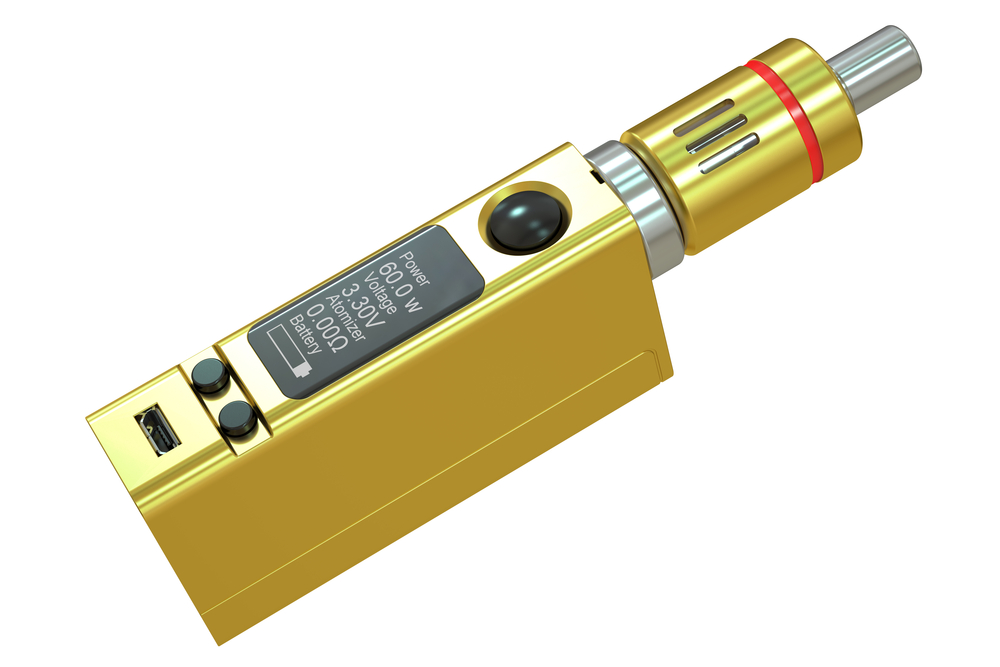
You've just cracked open a fresh bottle of top-shelf e-juice, filled your tank, and taken that first eager puff only to find the taste a bit flat. Your natural instinct is to start hammering the menu buttons, jumping between settings to chase down the richness promised on the bottle label. Flipping operating styles too quickly throws chaotic thermal spikes into your coil before the cotton fibers ever find a steady capillary flow. Digital chipsets respond in milliseconds, but vegetable glycerin and organic wicking material still obey stubborn rules of physics. Rushing through power profiles before your setup stabilizes doesn't unlock hidden notes; it scorches your juice and leaves you with an acrid mess.
The Board and the Cell: What a Regulated Box Mod Actually Does
At its core, a regulated box mod isn't just a battery holder with a fire button; it's a miniature electrical substation designed to manage raw chemical energy and turn it into predictable thermal output. Inside the chassis sits one or more high-drain lithium-ion cells, commonly in 18650, 20700, or 21700 form factors. These cells pack significant continuous discharge ratings, but their output voltage isn't fixed. A fully charged lithium cell sits at 4.2 volts, steadily declining to around 3.2 volts as its stored energy depletes. If you wired an atomizer straight to that cell, your vapor production would plunge with every hit you took throughout the afternoon.
To solve that problem, the battery connects to an advanced printed circuit board powered by a dedicated microprocessor. This board serves as an intelligent DC-DC converter utilizing buck-boost circuitry. When you demand a voltage higher than what your battery can supply, the boost converter steps the potential up by storing energy briefly in an internal inductor and releasing it at a higher voltage. When running low-power mouth-to-lung setup requiring less potential than the cell's current charge, the buck converter steps that voltage down through rapid electronic switching.
The board feeds this managed power through the spring-loaded positive pin of the 510 connector, using the threaded outer ring as the negative return path to complete the circuit. High-grade chipsets measure the baseline resistance of your coil by sending an imperceptible micro-pulse through the wire when you attach the atomizer. That initial reading dictates how much voltage the chip needs to push to hit your target wattage.
What complicates this process is real-time heat. Metal changes its electrical resistance as its temperature climbs, while battery cells suffer from internal voltage sag whenever you pull heavy current. Sophisticated boards compensate for these physical shifts hundreds of times per second, alternating between pure direct current and high-frequency pulse-width modulation to stabilize your vape. When you alter how that board behaves by hopping across its menu, you're fundamentally reprogramming the speed, aggression, and duration of that electrical discharge.
The Digital Toolbox: The Complete Catalog of Operating Modes
Modern chipsets package an array of distinct firing styles, and each one directs power across your atomizer in a completely specific manner:
- Variable Wattage (VW): The standard operating baseline for regulated devices. You pick a target wattage, and the microprocessor actively reads the coil's resistance to calculate the exact voltage required via Joule's law. If your resistance drifts slightly as the metal heats up during a long five-second draw, the chip automatically shifts its voltage output up or down to hold your wattage steady. It provides a consistent, predictable stream of power that makes everyday adjustments simple.
- Variable Voltage (VV): An older, purer form of regulation that bypasses automatic wattage calculations. Instead of picking an overall power target, you set the direct electrical potential, such as 3.7 or 4.0 volts. The resulting heat depends entirely on your build's physical resistance. If your coil resistance rises under sustained heat, your total wattage output actually drops, creating a soft, naturally tapering pull that many vintage rebuildable fans still swear by.
- Bypass Mode: Drops electrical regulation entirely while keeping safety protections active. The chipset acts as a direct conduit between the battery and the 510 connection, dumping the cell's raw potential straight into your atomizer just like an unregulated mechanical device. On a fresh cell, you're hitting your coil with 4.2 volts, which drops naturally as the cell drains. Short-circuit, reverse-polarity, and low-voltage cutoffs remain active, but power delivery is raw and unshaped.
- Standard Temperature Control (TC): A closed-loop thermal regulation system designed for specific non-resistance alloys like Nickel (Ni200), Titanium (Grade 1), and Stainless Steel (SS316L). The board doesn't use a physical thermometer inside the wick. Instead, it tracks the predictable increase in the wire's electrical resistance as it gets hot. Once the wire reaches your set thermal ceiling, the chip instantly cuts or throttles its power, preventing dry hits even if your wick runs bone-dry.
- TCR Mode (Temperature Coefficient of Resistance): An advanced extension of temperature control that lets you manually key in the mathematical resistance-change coefficient for non-standard alloys. If you're running specialty wires like NiFe30, Stainless Steel 430, or custom medical-grade alloys that don't match the factory TC presets, TCR lets you program the exact mathematical slope the board uses to track heat.
- TFR Mode (Temperature Factor of Resistance): The multi-point sibling of TCR. While TCR relies on a single linear equation, TFR uses a detailed lookup curve with multiple reference points across a wide temperature spectrum. This accommodates alloys whose resistance change curves non-linearly at extreme heat, providing surgical thermal accuracy for intricate custom coils.
- Replay Mode: A specialized feature developed for select premium chipsets. Rather than forcing you to dial in dry temperatures or calculate TCR values, you take normal puffs in wattage mode until you find a draw with great flavor. You hit save, and the board records the precise electrical and thermal profile of that specific puff. From that point on, the chip dynamically modulates wattage to duplicate that exact puff every time, regardless of whether your cotton is soaked or running low.
- Pulse Mode: Designed to counteract the natural thermal drop that happens during long pulls. Standard wattage outputs can taper off as heat dissipates into the atomizer chassis, but Pulse Mode fires rapid bursts of power every 0.02 seconds throughout the entire length of your draw. This constant micro-bursting maintains a steady coil temperature from the millisecond you hit the fire button until you release it.
- F(t) Mode: A specialized frequency-based firing profile that continuously sweeps output voltage across varied frequencies and ramp speeds during a single pull. The physical concept behind it is simple: different aroma concentrates within a complex e-liquid vaporize at distinct temperatures. By cycling its delivery waves, the chip aims to release every subtle flavor layer in a recipe without scorching the delicate top notes.
- Variable Power Curves (VPC / Curve Mode): Puts complete second-by-second output design into your hands. Rather than firing at a flat 60 watts, you can program a personalized timeline: launching at 75 watts for the first half-second to eliminate coil lag, dropping to 60 watts for two seconds of steady vapor, and tapering down to 45 watts toward the tail end to prevent the atomizer from overheating.
- Preheat and Ramp Profiles (Soft, Normal, Hard, Boost): Automated front-loaded wattage multipliers. A "Hard" or "Boost" setting dumps 10% to 25% extra power into the coil for the first few tenths of a second, which is vital for heating up thick, multi-strand exotic wire like fused Claptons. "Soft" does the reverse, easing into your target wattage gradually to protect delicate single-strand micro-coils from thermal shock.
- Eco Mode: A conservation profile that engages when your cells drop past a certain voltage floor, typically around 3.4 volts. The chip alters its display brightness, kills background sensor polling, and pulls back the initial wattage ramp to stretch your remaining battery run-time, changing the speed of your coil's heat cycle in the process.
- Super Player / Low-Resistance Mode: Removes the traditional 0.1-ohm safety boundary present on standard factory boards. This lets the chip fire ultra-low builds down to 0.05 ohms without displaying an "Atomizer Short" error message, driving massive power into heavy, low-resistance rebuildable decks.
- Memory Bank Presets (M1–M5): Dedicated storage slots within the menu system that store full profiles. A single bank holds a designated wattage, preheat level, curve shape, or TC ceiling. Toggling between these slots lets you jump between vastly different setups in seconds, though accidentally selecting an aggressive bank on a delicate build carries immediate consequences.
Viscosity, Heat, and Flavor: The Chemistry Inside Your Tank
To see how these electrical profiles mess with your juice, you have to break down what e-liquid actually is on a molecular level. E-Juice isn't a single chemical compound with a unified boiling point. It's a precise suspension of vegetable glycerin, propylene glycol, freebase or salt nicotine, and complex aromatic flavoring compounds. Every single one of these ingredients responds to heat, air, and capillary motion in a completely different way.
Vegetable Glycerin and Propylene Glycol Dynamics
The carrier base of your liquid is formed by vegetable glycerin (VG) and propylene glycol (PG). Vegetable glycerin is a thick, carbohydrate-derived alcohol with three hydroxyl groups that give it a dense, syrup-like consistency. It carries a high boiling point of roughly 290°C (554°F). Because of its thick molecular structure, VG flows slowly at room temperature, putting heavy demands on your wicking material.
Propylene glycol, by contrast, is a much thinner diol with a boiling point of roughly 188°C (370°F). It carries aroma concentrates easily, absorbs into cotton instantly, and atomizes at a far lower temperature than VG.
When you saturate a wick, capillary action pulls this blend through the microscopic channels between raw cotton fibers. But here's the kicker: temperature directly alters fluid viscosity. As your coil warms up, radiant heat thins out the surrounding liquid, speeding up capillary flow. High-VG liquids rely heavily on this gentle warming effect to wick properly.
However, if your coil heats up faster than the surrounding juice can thin and travel inward, you create an instantaneous void at the coil surface. The low-boiling PG flashes off into vapor immediately, leaving the thick, un-thinned VG behind to struggle against dry cotton fibers.
The Fragility of Volatile Flavor Concentrates
The flavor in your bottle doesn't come from simple fruit juices or crushed spices; it's engineered using aromatic chemical compounds including esters, aldehydes, ketones, and terpenes, suspended in a PG carrier. These volatile compounds are fragile.
Bright top notes like lemon, raspberry, and crisp orchard fruits rely on delicate esters that possess low flash points. They vaporize beautifully at mild temperatures between 140°C and 175°C. Deep base notes like custards, vanillas, chocolates, and robust tobaccos depend on heavier molecules like vanillin, acetoin, or complex pyrazines that require heat ranges between 190°C and 220°C to release their richness.
When a coil delivers erratic, unstable heat, you smash this delicate balance. If you hit a fresh wick with a violent surge of thermal energy, those delicate top-note esters don't cleanly vaporize. They decompose. Chemical bonds shear apart, transforming bright strawberry or citrus notes into harsh, solvent-like chemical tones that taste like burnt plastic.
Sweetener Pyrolysis and the Carbon Shell
Modern e-liquid formulations rely heavily on concentrated sweetening agents, primarily sucralose and ethyl maltol. These compounds deliver that sweet candy finish on the exhale, but they hate irregular, concentrated heat.
Sucralose begins to thermally decompose around 120°C, and by 200°C it undergoes aggressive pyrolysis. In an ideal setup with stable power and saturated wicks, the constant inward flow of liquid sweeps past the wire, absorbing the heat and carrying atomized sweetener away in the vapor stream.
When the power delivery spikes violently or jumps past what the current saturation level can cool, unvaporized sucralose bakes directly onto the wire. It sheds its volatile elements and leaves behind a solid shell of pure carbonized residue.
This black crust is a thermal insulator. It stops subsequent juice from touching the wire directly. Instead, fresh liquid pools against this scorching carbon shell, where it bakes, degrades, and turns dark and bitter.
Nicotine Stability and Oxidation
Nicotine is an alkaloid that degrades readily when exposed to excessive heat, oxygen, and ultraviolet light. In its freebase state, nicotine features a relatively high pH, providing a punchy throat hit. Nicotine salts bind that freebase molecule with an organic acid like benzoic or levulinic acid to drop the pH level, delivering smooth absorption at higher strengths.
Both forms degrade under thermal abuse. When subjected to sudden, unmanaged heat spikes, the chemical bonds binding nicotine salts can split prematurely, turning a smooth 20mg or 35mg draw into a throat-ripping blast.
Thermal stress accelerates the oxidation of freebase nicotine, converting it into cotinine and various oxide byproducts. This chemical shift introduces an unmistakable peppery, stale taste that ruins whatever fruit, dessert, or cream profile you put in your reservoir.
The Core Impact: What Happens When You Switch Modes Too Fast
Now we arrive at the heart of the matter: what actually happens when you flip between operating modes before your tank, coil, and wick have settled into a stable rhythm? The impact isn't theoretical; it's a physical and chemical chain reaction that wrecks juice faster than almost anything else you can do.
Capillary Starvation and Core Scorching
The most destructive consequence of rapid mode-hopping is the invisible dry hit. You look through your tank's glass section or glance at the deck of your dripper and see a wick that looks completely wet and glistening. You take a pull, and it tastes atrocious. You pull the cotton out of the coil, and while the tails outside are bright white, the core running through the center of the wire wrap is charred black.
This happens because modern modes command radically different ramp-up speeds. Say you've spent ten minutes breaking in a fresh coil on Variable Wattage at a mild 35 watts. The cotton fibers are saturated, but the capillary pathways haven't fully expanded to support high-velocity fluid transfer.
If you abruptly switch to Bypass Mode on a set of fresh 4.2-volt batteries, or jump into a Custom Power Curve featuring an aggressive front-loaded preheat, your wattage can instantly surge past 80 or 90 watts.
The thin layer of liquid sitting in direct contact with the wire atomizes in a fraction of a second. But because the cotton hasn't established a high-speed capillary draw, fresh liquid can't push into the center of the coil fast enough to replace what just boiled off.
For two or three seconds, your coil wire glows red-hot against dry, compressed organic cotton fibers. The cotton scorches at the microscopic level. Once cotton fibers carbonize, their capillary ability is gone for good. That scorched cotton continues to leach burnt carbon flavor into every fresh drop of liquid that passes through it, permanently ruining the taste of your tank until you strip the deck and re-wick.
Thermal Whiplash and Reservoir Contamination
Switching modes erratically doesn't just damage the cotton inside the coil; it pollutes the unvaped liquid sitting out in your tank through a nasty phenomenon known as wicking reflux.
When your coil overheats from an unexpected power spike, the e-liquid sitting against the wire doesn't always flash completely into airborne mist. A significant portion of it partially boils, losing its volatile PG and water content while concentrating the remaining VG, heavy flavor molecules, and sweeteners into a thick, half-burned sludge.
As soon as you release the fire button, your atomizer rapidly cools down. As that hot air and metal contract, they create a momentary vacuum within the wicking channels.
That vacuum draws that half-cooked, caramelized syrup backward away from the coil and pulls it out through the wick slots into the main tank reservoir. You can watch this happen in real time: dark, thread-like swirls of discolored, syrupy fluid bleed out of the cotton holes and twist upward into your clear juice. Within an hour, a five-milliliter tank of crystal-clear peach liquid turns a murky, tea-colored brown. The burnt taste is no longer confined to the cotton; you've chemically contaminated the entire reservoir of juice.
The Bypass Mode Hazard
Jumping from regulated control straight into Bypass Mode is the fastest way to ruin a coil and incinerate your e-liquid, particularly if you run commercial sub-ohm drop-in coils.
Regulated wattage modes serve as a safety shield. If you put a 0.2-ohm coil into a tank, you can set your mod to 40 watts. The board calculates the necessary voltage (), determining that it only needs to send about 2.82 volts to the 510 pin. Your coil runs cool, your juice wicks effortlessly, and the flavor stays crisp.
If you casually click through your menu and select Bypass Mode with fully charged dual cells, the board stops limiting output. It pulls straight battery potential, which might deliver upwards of 7.4 volts through a series circuit or 4.0 volts through a single cell under load.
On that same 0.2-ohm build with a single cell dumping 3.8 volts under load, Ohm's law () dictates your output: .
You just forced a near 100% power leap on a coil that was happily cruising along at 40 watts. The thin cotton barrier packed inside a pre-built commercial coil head can't pull liquid fast enough to buffer that violent leap in heat flux. The internal cotton burns on contact, the sweetener instantly turns to crust, and that twenty-dollar bottle of artisan liquid you just poured tastes like burnt campfire soot.
Shifting from Temperature Control Back to Raw Wattage
A more subtle, but equally irritating, flavor trap happens when moving from Temperature Control over to standard power profiles.
In a dialed-in TC setup running Stainless Steel wire, the chipset keeps a firm ceiling on your heat. As you draw, the board rapidly cuts and restores power, keeping your build around 205°C (400°F). At that steady temperature, the subtle, light flavor notes in your liquid stay crisp, and the cotton remains completely safe even during extended ten-second pulls.
If you decide to flick over to Variable Wattage or Variable Voltage without dialing down your baseline power first, that protective safety net disappears. You hit the button expecting that smooth, gentle draw, but the chip throws a flat, sustained wattage blast into the coil with zero thermal throttling.
The heat rapidly climbs past 260°C (500°F). The delicate top-tier flavor notes flash off in a microsecond, the heavier base flavorings scorch, and the juice takes on a flat, harsh taste that ruins your palate for the rest of the day.
Question: Can Rapid Mode Adjustments Ever Help Your E-Liquid?
While sudden mode switches usually cause trouble, there are specific, calculated times where shifting operating profiles can actually rescue your liquid and save a build. The trick is knowing why you're doing it, rather than toggling settings blindly.
The most practical upside involves clearing an oversaturated or flooded atomizer deck. If your tank has been sitting in a hot car, the liquid inside will thin out, slip past the cotton barriers, and flood the inner air chamber. When you take a draw in normal Variable Wattage mode, the coil can't heat up that massive pool of liquid cleanly. Instead, it gurgles, pops, and spits blistering drops of raw, unvaporized liquid straight up the drip tip into your mouth.
You can fix this by quickly dropping into a soft Variable Voltage setting or a low-intensity Custom Power Curve. By applying a gentle, slow-climbing voltage, you can warm the chamber, boil off the excess pooled liquid without popping, and clear out the flooded airflow path without shocking the wick. Once the gurgle clears and the airflow smooths out, you can return to your preferred wattage baseline without having wasted a tank of juice or ruined your cotton.
Another genuine benefit is using structured Preheat profiles to break in heavy, multi-strand exotic coils. Stiff alien or fused Clapton wires carry massive thermal mass, meaning they take a long time to heat up and an equally long time to cool down.
Using a brief, calibrated "Hard" preheat kicks that cold wire into gear instantly, matching the vaporization rate to your inhale speed. This prevents the e-liquid from stewing and boiling into dark syrup while waiting for the coil to get hot, preserving the fresh taste of complex dessert blends.
Shop-Floor Rules for Moving Between Modes
Switching modes should be a deliberate, step-by-step process that respects the physical limits of your wicking and liquid. If you want to explore the different profiles your box mod offers without ruining your juice, stick to these counter-tested habits:
- Establish Baseline Saturation First: Never play with aggressive firing profiles, Bypass Mode, or hard preheats on fresh cotton. Saturate your wick thoroughly, fill the tank, and let the setup sit for a full ten minutes. Take your first ten to fifteen pulls on a standard, low-wattage baseline to let the cotton fibers expand, clear out any manufacturing starch, and establish strong capillary suction before testing alternate settings.
- Step Up Power in Small Intervals: If you're transitioning from a soft profile or TC over to Variable Wattage, don't guess your target power. Drop your wattage down lower than you think you need, and step it up in two-to-three-watt increments. Take a couple of short pulls at each step, checking the flavor and vapor warmth along the way. If the vapor starts tasting dry or losing its brightness, back off immediately before the cotton scorches.
- Rest Your Wick Between Profile Shifts: When jumping between fundamentally different firing styles, give your device thirty to sixty seconds of rest. If you just pushed a hot pull in Pulse Mode and instantly switch to a Custom Power Curve, your coil is already carrying residual heat. Firing a brand-new, aggressive curve into an already hot atomizer will spike your coil temperature far higher than calculated, scorching your juice.
- Take a Quick Clearing Puff: After changing menu profiles, fire the device for a half-second away from your face before taking a pull. Listen to the sound of the atomizer. A healthy, properly powered coil produces a smooth, quiet sizzle. If you hear an explosive crack or a violent spit, your new mode is driving too much power into that specific build. You'll catch the mistake before taking a mouthful of scorched vapor.
The Rhythm of Good E-Liquid Flavor
Rapid button clicks make it easy to forget that fresh e-liquid needs real time to soak through packed cotton fibers. Even the smartest chipset can't force vape juice to absorb sudden heat spikes faster than natural wicking permits. When you line up your vaping habits with how your e-juice actually feeds across the heating wire, you protect the recipe from breaking down into harsh notes. Giving the coil and cotton that brief window to settle isn't holding your setup back; it's the secret to getting rich, accurate flavor on every single pull.
Leave a Reply